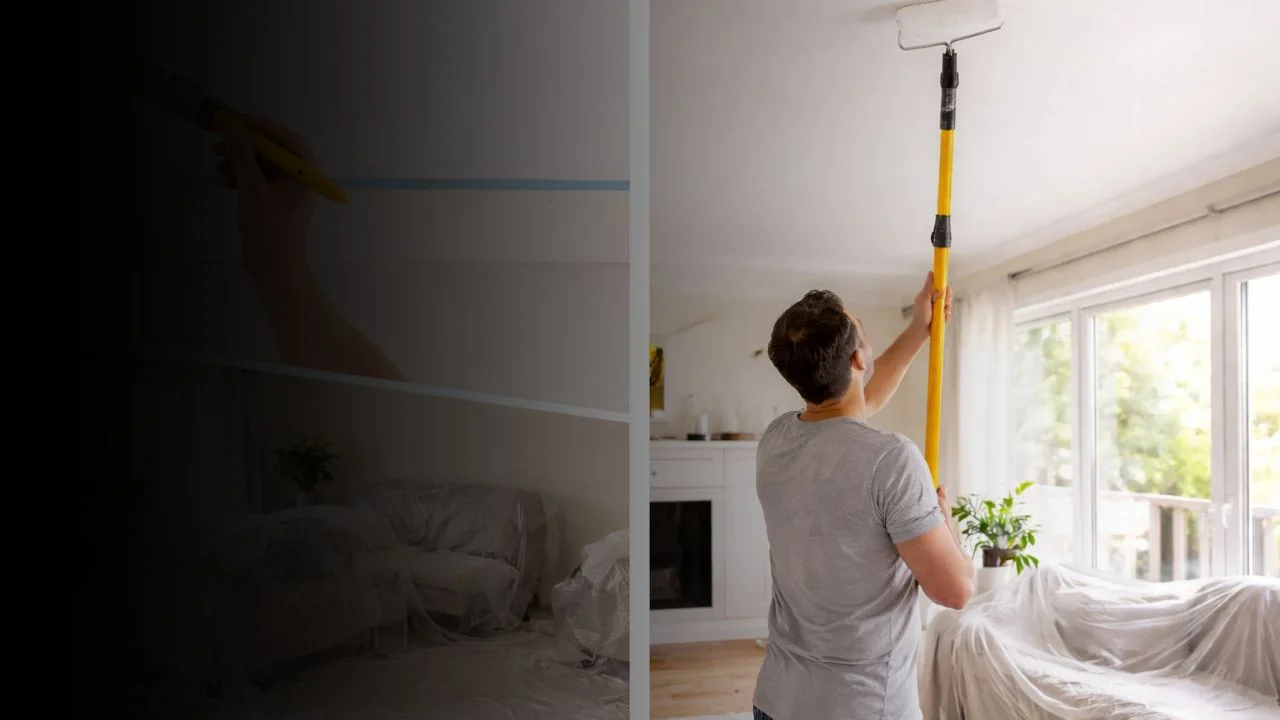
How to Paint a Ceiling: A Step-by-Step Guide That Actually Works
Painting a ceiling is one of those jobs that sounds simple until you're standing in a room with a stiff neck, a dripping roller, and visible lines all over your freshly painted surface. It does not have to go that way. With the right prep, the right tools, and a few techniques that professional painters use every day, you can get a clean, smooth finish on your first try.
What You’ll Need: Tools and Materials
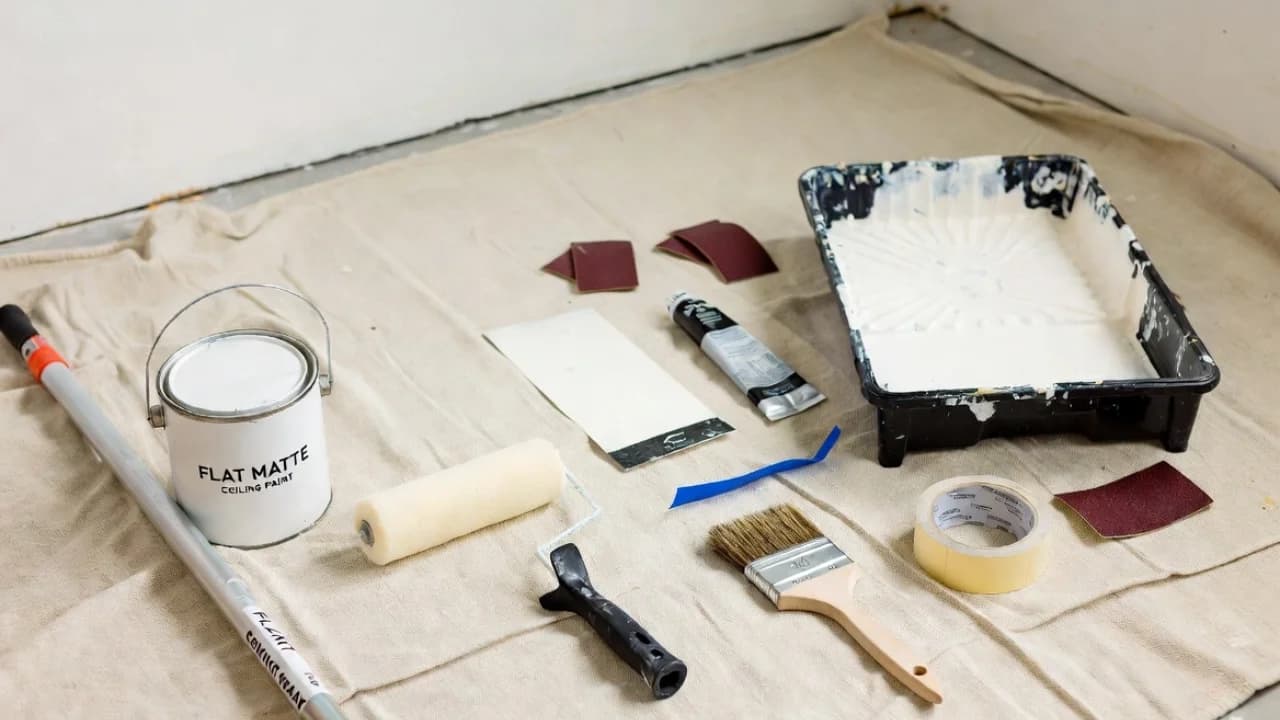
Before you open a single tin, gather everything first. Running back and forth mid-paint because you forgot the tape is how you end up with dry edges and visible lap lines.
- Flat or matte ceiling paint – Hides imperfections and minimises splatter
- Roller with 1/2” nap cover – For smooth to semi-smooth ceilings (use 3/4” for textured ceilings)
- Extension pole – Lets you paint from the floor and saves your neck
- 2–3 inch angled sash brush – For cutting in around edges and fixtures
- Painter’s tape – Protects walls and cornice from paint bleed
- Drop cloths – Covers floors and furniture from drips
- Paint tray and liner – Loads the roller evenly
- Sandpaper (120 grit) and filler – For repairing cracks and scuffs before painting
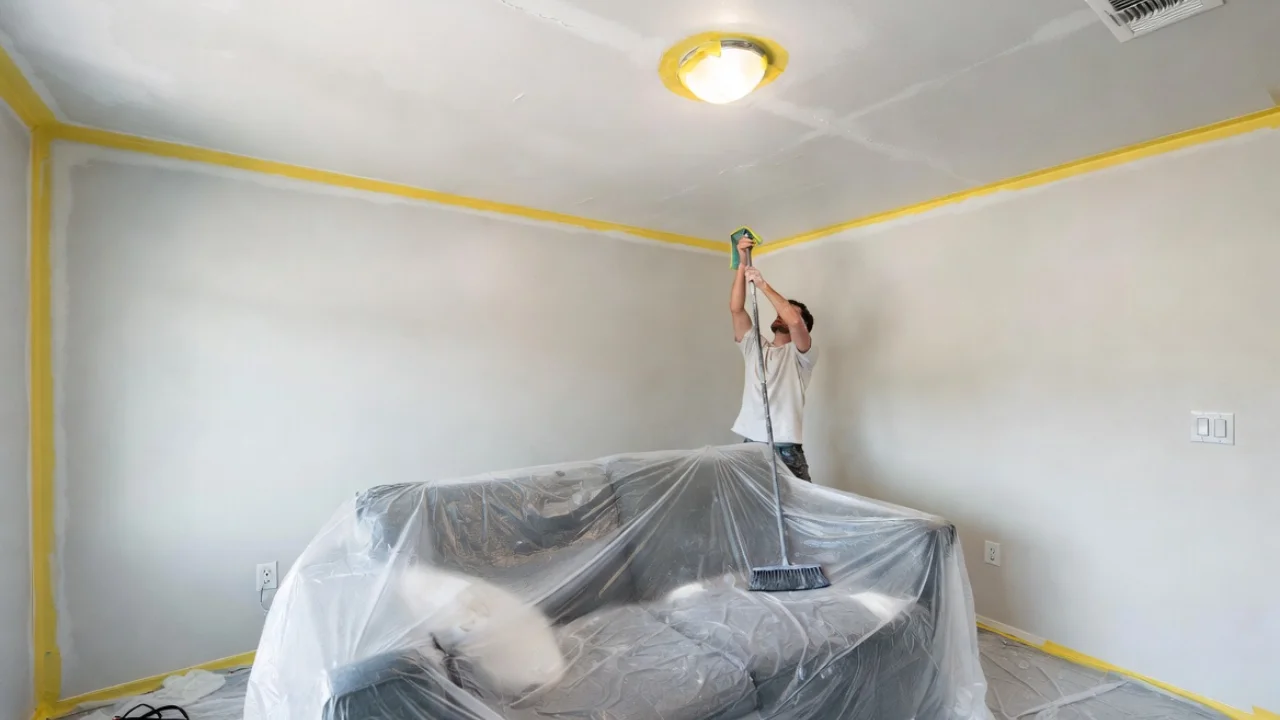
Step 1: Prepare the Room and the Ceiling
Most of your time goes here, and it matters more than any painting technique. Move furniture out or push it to the center and cover it. Lay drop cloths over the floor and against the walls.
Next, look up. Use a soft broom or dry microfibre cloth to sweep away cobwebs and dust. If there is any grease or grime on the ceiling (especially in kitchens), wipe it down with a damp cloth and let it dry completely. Wet paint on a dirty surface will not stick well.
Fill any cracks or holes with a lightweight filler, let it dry, then sand smooth. Apply painter’s tape along the top edge of your walls and around light fixtures. Turn off the power before removing any ceiling fittings.
Do You Need to Prime a Ceiling Before Painting?
On bare new drywall, yes – always prime first. If you are painting over a water stain, use a stain-blocking primer like Zinsser Bulls Eye before your topcoat, otherwise the stain will bleed through. For a previously painted ceiling in reasonable condition, a good paint-and-primer formula will usually do the job without a separate priming step. For more complex exterior work, experienced exterior painting services in Melbourne can help ensure proper surface preparation and longer-lasting results.
Step 2: Cut In Around the Edges First
Cutting in means painting a neat border around the perimeter of the ceiling using a brush, before you bring the roller out. A lot of beginners skip this or do it after rolling, and that is exactly what causes the visible brushed edge (called “picture framing”) you sometimes see on finished ceilings.
Load your angled sash brush, wipe off the excess, and paint a 50–70mm band all the way around the ceiling edge and around any light fixtures. Start each stroke slightly away from the edge and work toward the tape. Keep your brush strokes going in the same direction. Do not leave thick globs at corners.
Quick tip: Work in sections. Cut in one wall’s edge, then roll that section before the brushed paint dries. This keeps a wet edge between the brushed and rolled areas, so the join disappears completely.
Step 3: How to Roll the Ceiling Properly
This is where most people either get it right or end up frustrated. Here is the correct process:
- Load the roller correctly. Dip the roller about halfway into the paint tray, then roll it back and forth on the ribbed section until the cover is coated evenly. It should feel heavy with paint but not be dripping. An overloaded roller is the main cause of ceiling drips.
- Start in a corner and use the W or M pattern. Begin at a corner near the natural light source. Roll the paint onto the ceiling in a W or M shape over a roughly 2 square metre section. This spreads the paint loosely before you fill in the gaps.
- Fill in with straight overlapping strokes. After the W or M, go back over the same section with straight, parallel strokes, slightly overlapping each pass. Roll slowly and consistently. Quick, jerky movements throw paint off the roller.
- Use the roll-and-lift technique. As you reach the end of each stroke, slowly lift the roller off the surface instead of stopping flat. This feathers the edge and prevents a hard line where sections meet. Reload the roller and move to the next section, slightly overlapping the previous one to maintain a wet edge.
How Many Coats Does a Ceiling Need?
Two coats is the standard. One coat rarely gives full coverage, and a single thin coat will show every flaw in the surface. Wait for the first coat to dry completely before applying the second one – check your paint tin, but most ceiling paints need 2 to 4 hours between coats. This is also where professional painters in Melbourne make a difference, as they know the right timing and technique for smooth, even coverage. Apply the second coat perpendicular to the first. If your first coat went north-south, the second coat goes east-west. This is one of the easiest ways to eliminate roller marks.
How to Avoid Roller Marks on a Ceiling
Roller marks on a finished ceiling are one of the most common DIY painting complaints. The good news is they are almost entirely preventable. Here is what causes them and how to fix each one:
- Wrong roller nap: Use a 1/2-inch wool-blend roller cover for smooth ceilings. Cheap roller covers leave lint and uneven texture. Before you start, wrap masking tape around the new cover and pull it off to remove any loose fibres.
- Too much paint on the roller: An overloaded roller pushes paint ahead of itself instead of laying it down evenly. Keep the roller well-loaded but not dripping.
- Losing the wet edge: Once paint starts to dry in one area and you roll back over it, you will leave marks. Work quickly in sections and always overlap into the wet area.
- Wrong paint sheen: Gloss and semi-gloss paints show every imperfection under light. Stick to flat or matte ceiling paint, which is formulated to hide surface variations and reduce roller tracking.
- Rolling too fast: Fast roller movement throws paint off and creates an uneven application. Slow, deliberate strokes give better results every time.
If roller marks are already there: Let the paint dry, then lightly sand with 120-grit paper, wipe clean, and apply another coat in the opposite direction. A flat-finish ceiling paint often self-levels overnight, so check again in the morning before sanding.
Pro Tips That Make a Noticeable Difference
These are the things professional painters do that most home guides never mention:
- Use a work light at an angle. A regular room light shining straight down will hide thin spots and missed areas. Position a portable work light low and angled across the ceiling so shadows reveal every uneven patch as you paint.
- Work away from the main light source. Natural light from a window should be at your back, not in your face. This helps you see sheen differences as the paint goes on.
- Remove painter’s tape while the second coat is slightly tacky. If you wait until the paint is bone dry, the tape can peel away chunks of the painted edge. Pull it off at a 45-degree angle, slow and steady.
- Paint the whole ceiling in one session. Stopping halfway through means the paint dries with a visible line where you paused. If you need a break, stop at a wall corner, not in the middle of the ceiling.
- Never press down on the roller. Let the weight of the roller and the paint do the work. Pressing hard squeezes paint out unevenly and causes exactly the kind of tracks you are trying to avoid.
Common mistake to avoid: Using wall paint on a ceiling. Wall paint is thinner, splashes more, and does not cover as uniformly when you are rolling overhead. Dedicated ceiling paint is thicker, dries faster, and is worth the extra cost per litre.
Choosing the Right Ceiling Paint
Ceiling-specific paint comes in flat or ultra-flat finish for a reason. Flat paint does not reflect light, which means it does not show roller marks, brush lines, or minor surface imperfections. The thicker consistency of ceiling paint also reduces the dripping and splashing that comes with rolling overhead.
For smooth or lightly textured ceilings, a 1/2-inch nap roller cover is right. Heavily textured or popcorn ceilings need a thicker 3/4-inch nap that can get paint into the valleys and peaks without dragging them off. For bathroom ceilings, look for a paint that includes a mould and mildew inhibitor.
Frequently Asked Questions
What is the trick to painting ceilings?
The biggest trick is maintaining a wet edge. Work in sections of around 2 square metres, always rolling back into wet paint before it starts to dry. Use flat ceiling paint, cut in before rolling, and apply two coats in opposite directions to avoid visible roller marks.
What should you not do when painting a ceiling?
Do not use regular wall paint on a ceiling – it is too thin and drips more when rolled overhead. Do not overload the roller, skip the cutting-in step, or try to paint the whole ceiling in one coat. And do not wait until the paint is fully dry to remove painter’s tape, or it will pull the edge off with it.
How do you paint a ceiling for beginners?
Start with a clean, repaired surface. Apply painter’s tape along the walls and around fixtures. Cut in a 50–70mm border with an angled brush, then roll the ceiling using a W or M pattern in small sections. Two coats applied in opposite directions will give a smooth, professional-looking result.
What is the hardest room to paint?
Bathrooms are widely considered the hardest because of moisture, limited ventilation, and the need for mould-resistant paint. High-ceilinged rooms and stairwells come close, since reaching the full height without scaffolding is difficult and lap marks are more visible over large open surfaces.
Final Thoughts
Painting a ceiling is one of those jobs where preparation genuinely does most of the work. Get the surface clean and repaired, tape everything off properly, cut in first, and roll in two coats going in different directions. The roller marks and drips that most people dread come down to using too much paint and going too fast. Slow down, keep a wet edge, and use the right flat-finish paint for the job.
With these steps done right, you will end up with a ceiling that looks professionally finished. No neck pain optional.

Marcus Langley
Lead Color Consultant & Senior Painter
Marcus Langley is a certified painter and color consultant with 14 years of experience transforming homes and businesses across Melbourne. He specializes in interior work, exterior coatings, and decorative finishes, and loves helping homeowners find the perfect color for every space.