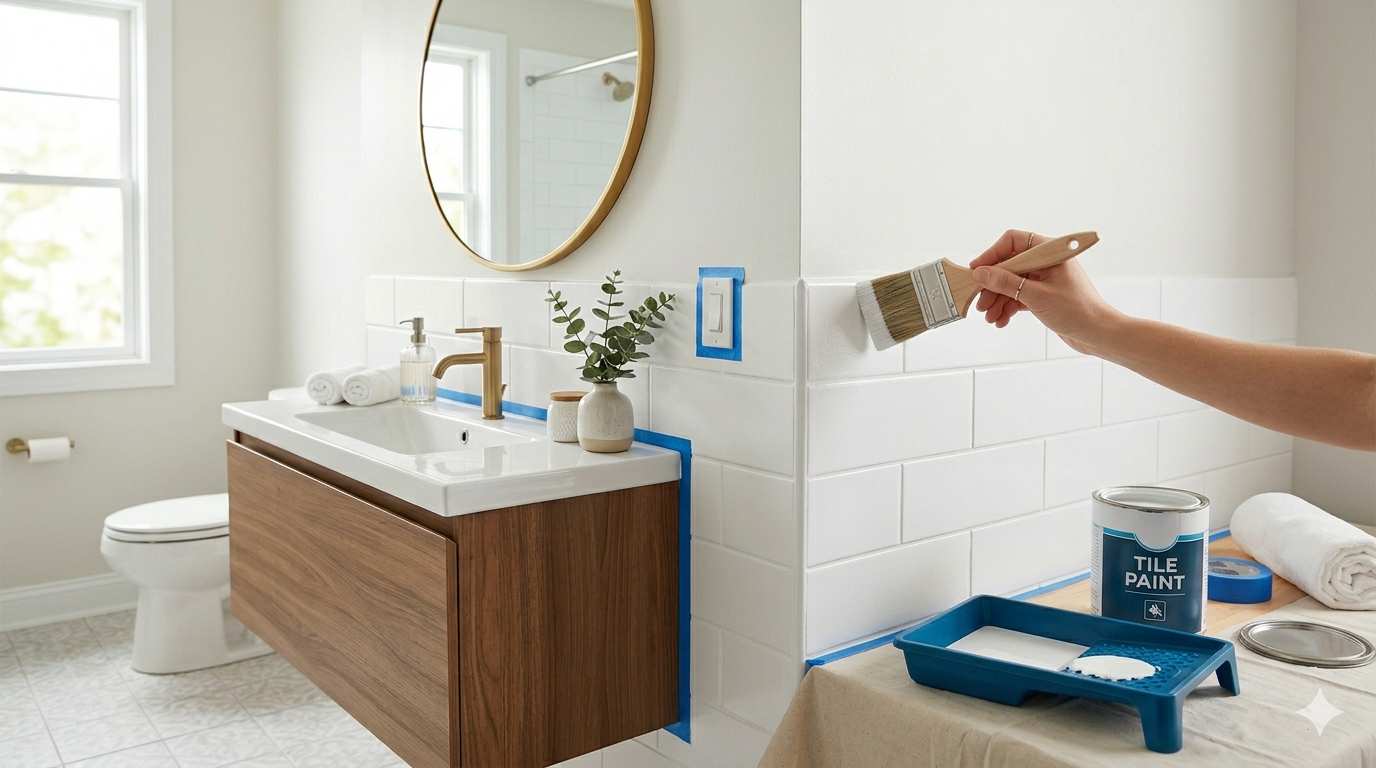
Can You Paint Bathroom Tiles? Everything You Need to Know Before You Start
Yes, you can paint bathroom tiles. It works and it can save a lot of money. If you do it the right way, it can last for many years. But it is not as simple as just using normal wall paint. You need good preparation, the right primer, and the right paint. If you do not do this properly, the paint can start peeling or look bad after a short time.
This guide covers everything from surface prep and paint types to where you should and should not paint tiles in your bathroom. It also looks at how long tile paint actually lasts and whether the cost savings are worth it compared to a full retile.
Can You Paint Bathroom Tiles? The Short Answer
Yes. Ceramic tiles and porcelain tiles can both be painted if you use the right products. These are the most common tiles in bathrooms, and they can hold paint well when the surface is prepared properly. Natural stone tiles can also be painted, but they absorb primer differently, so they need a masonry-rated product often handled by experienced painting contractors in Melbourne.
The key word is preparation. Tile surfaces are smooth and do not absorb paint, so the paint has nothing to stick to unless you create that grip. Sanding, cleaning (degreasing), and using a tile-specific primer are what make the difference between paint that lasts and paint that peels quickly.
Bathroom tile painting works best on wall tiles away from heavy water areas. Shower floors are not a good option if you want long-lasting results.
Where You Should (and Should Not) Paint Bathroom Tiles
Good Areas for Painting Bathroom Tiles
- Bathroom wall tiles: These are the best candidates. Wall tiles away from constant water splash hold paint well and can last 5 to 7 years with proper preparation and sealing.
- Splashbacks: Tiles around sinks and vanity areas work well. Apply a clear sealant along wet edges once the paint has cured for added protection.
- Bathroom floor tiles: Possible, but expect a shorter lifespan of around 3 to 5 years due to foot traffic. Use a specialist floor tile paint and always apply a clear sealer on top.
- Bathroom cabinets with tile surfaces: These are low-moisture and low-traffic areas. Paint can last up to 10 years here with two good coats.
Good Areas for Painting Bathroom Tiles
- Bathroom wall tiles: These are the best candidates. Wall tiles away from constant water splash hold paint well and can last 5 to 7 years with proper preparation and sealing.
- Splashbacks: Tiles around sinks and vanity areas work well. Apply a clear sealant along wet edges once the paint has cured for added protection.
- Bathroom floor tiles: Possible, but expect a shorter lifespan of around 3 to 5 years due to foot traffic. Use a specialist floor tile paint and always apply a clear sealer on top.
- Bathroom cabinets with tile surfaces: These are low-moisture and low-traffic areas. Paint can last up to 10 years here with two good coats.
Areas to Avoid or Approach with Caution
- Shower floor tiles: Constant water, soap, and foot traffic make this the hardest area for tile paint to survive. It is not recommended if you want lasting results.
- Inside shower cubicle walls: Risky. The humidity and daily water contact wear paint down fast. Expect 1 to 2 years at best, and plan for regular touch-ups. Extra sealing is a must.
- Surfaces regularly submerged in water: Tile paint is not designed for full water immersion. Do not use it on bath interiors or any surface that sits in water.
Best Paint for Bathroom Tiles
Standard wall paint will not work on tiles. The surface is too smooth and the bathroom environment too harsh. You need a paint that bonds to non-porous surfaces and can handle ongoing moisture and humidity.
Epoxy Paint
Epoxy paint is the best option for bathroom tiles. It bonds hard, resists moisture well, and holds up against regular cleaning products. Two-part epoxy systems, where you mix a base with an activator before use, give the strongest finish. These are particularly good for wall tiles, splashbacks, and any area that gets splashed regularly, and are similar to the professional-grade systems used in epoxy flooring solutions.
Epoxy paint costs around $20 to $35 per gallon. Once mixed, most two-part systems need to be used within 5 days. Apply when the room temperature is between 10 and 30 degrees Celsius for best adhesion.
Acrylic Latex Paint
Acrylic latex is a more budget-friendly option, costing around $10 to $30 per gallon. It is easier to work with, has lower odor, and cleans up with water. The trade-off is durability. In high-humidity areas, acrylic latex does not hold as well as epoxy unless you choose a mildew-resistant formula and pair it with a strong bonding primer.
Acrylic latex is fine for bathroom walls that are away from direct water contact. For anything closer to moisture, step up to epoxy.
Specialist Tile Paint Kits
Ready-to-use tile paint kits are designed specifically for this job. They include the right formulation for adhesion on smooth tile surfaces and often come with a primer or bonding additive already built in. Brands like Rust-Oleum offer tile-specific systems with good coverage rates, around 14 square metres per litre per coat, and fast recoat times. These are a practical choice if you want a straightforward product without mixing ratios to worry about.
What to Avoid
- Standard emulsion or wall paint: no adhesion on glazed tile surfaces
- Oil-based paint without a compatible primer: adhesion issues and long dry times
- Chalk paint without a strong sealant: not moisture-resistant enough for bathrooms
Surface Preparation: The Most Important Step
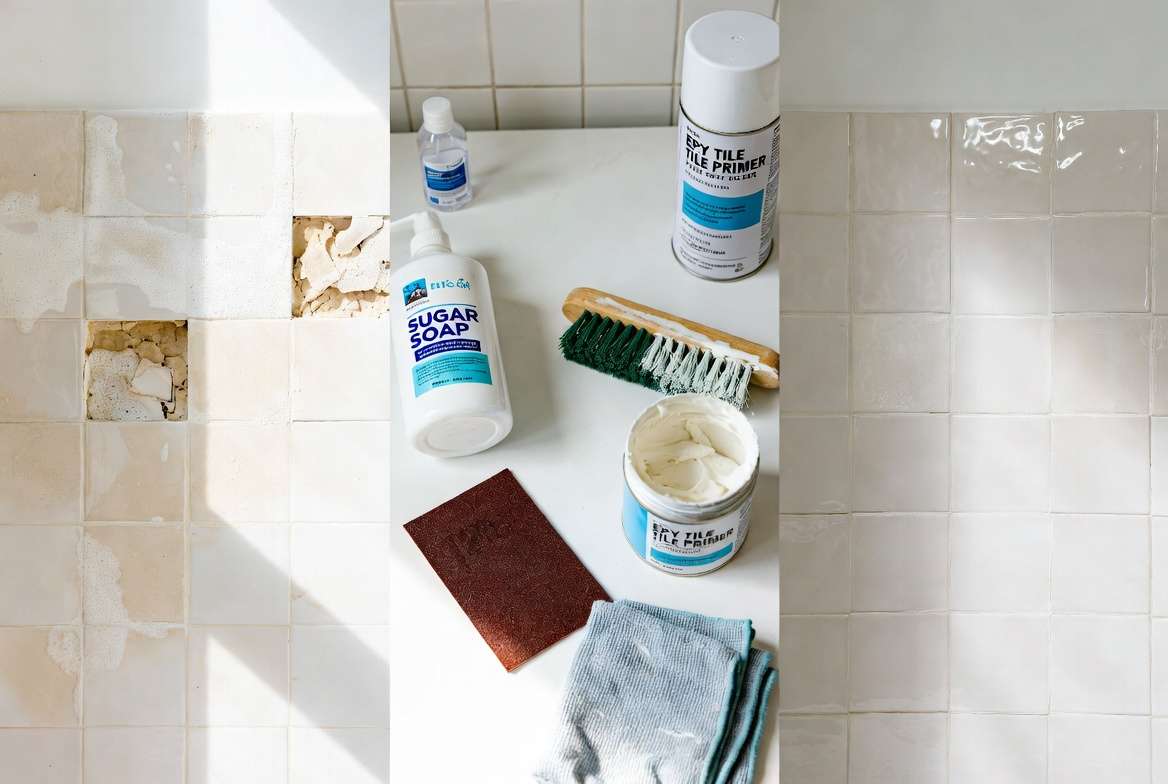
More tile paint jobs fail because of poor preparation than because of the paint itself. Tiles are sealed, smooth, and non-porous. If you skip prep, paint will not bond properly and will start peeling, chipping, or bubbling within months.
Step 1: Deep Clean the Tiles
Remove soap scum, grease, limescale, and any mold or mildew before you do anything else. A sugar soap solution or a dedicated tile degreaser works well. Scrub the grout lines too, as they collect residue that stops primer from bonding. Rinse thoroughly and allow the surface to dry completely. Any moisture left underneath the primer will cause problems later.
Step 2: Repair Grout Lines and Damaged Tiles
Check the grout lines for cracks, crumbling sections, or discoloration that will not clean up. Repair failing grout before painting because paint on top of damaged grout will lift. Also check for any chipped or cracked tiles. Fill minor chips with tile filler and sand smooth before moving on.
Step 3: Sand the Tile Surface
Sanding is non-negotiable. Use 120-grit sandpaper to scuff the surface of each tile. You are not trying to remove the glaze, just dull it enough for the primer to grip. Pay attention to grout lines as well, since they absorb paint differently from the tile face. Wipe off all sanding dust with a tack cloth or damp rag and let the surface dry again.
Step 4: Apply Tile Primer
A tile-specific primer, sometimes called a bonding primer or tile primer, is the foundation of the whole job. Use an epoxy or urethane primer for ceramic and porcelain tiles. For natural stone tiles, choose a masonry primer instead. Apply a thin, even coat and let it dry fully according to the manufacturers instructions. Rushing this step is one of the most common reasons tile paint fails.
How to Paint Bathroom Tiles: Step by Step
- Mask off edges and fittings. Protect grout lines adjacent to fittings, skirting, and any surfaces you are not painting.
- Mix paint if using a two-part system. Follow the manufacturers ratio and use within the working time specified, usually within 5 days for epoxy systems.
- Cut in around grout lines with a brush. Use a small brush to work paint into grout lines first before rolling the main tile face.
- Roll the tile face. Use a short-pile or foam roller for the smoothest finish. Do not use a spray application. Roll in thin, even coats and avoid overloading the roller.
- Apply a second coat. Two thin coats give better results than one thick coat. Allow the first coat to dry before applying the second. Typical recoat time is around 4 hours.
- Seal wet areas. Once the paint has fully cured, apply a clear sealant or silicone along any wet edges such as around the sink, bath edge, or shower entry.
- Limit water contact for the first week. Full cure takes around 7 days. During this period, keep water exposure to a minimum and clean with a damp cloth only.
Drying and Cure Times
Tile paint has different stages of drying. Touch-dry typically takes around 1 hour. Hard-dry, meaning you can handle the surface without marking it, usually takes 4 hours. The second coat can normally be applied after 4 hours. Full cure, where the paint reaches its maximum hardness and water resistance, takes 7 days.
Do not judge the final result until the paint has fully cured. It may look a little dull or slightly uneven before then. Plan your project so the bathroom is not in heavy use during that first week.
Does Tile Paint Last in Bathrooms?
This is one of the most searched questions around painting bathroom tiles, and the honest answer is: it depends on where you paint and how well you prepare.
- Bathroom wall tiles and splashbacks: 5 to 7 years with good prep and a sealant
- Bathroom floor tiles: 3 to 5 years with a specialist floor paint and a clear sealer on top
- Shower cubicle walls: 1 to 2 years, with regular maintenance and touch-ups needed
- Shower floor: Not recommended for lasting results
Real-world experience from homeowners backs this up. Painted floor tiles in a household bathroom with regular family use have been reported to look good for up to four years before needing a refresh. In low-traffic areas like a guest bathroom or powder room, results can last even longer. The main threats to painted tile are constant moisture, abrasive cleaning products, and physical impact, this is why proper prep and finishing are often handled as part of professional interior painting services.
Tile Painting Before and After: What to Realistically Expect
A good tile painting job can dramatically change the look of a bathroom. Old, discoloured, or outdated tiles can go from dated to fresh without any demolition work. The finish on ceramic and porcelain tiles can look surprisingly close to new tile when done well.
What you should not expect is the result to look identical to new tiles up close. Grout lines will still be visible. The texture underfoot on painted floor tiles is different to unglazed tile. And unlike real tiles, the painted surface will need maintenance over time.
The most successful transformations are in bathrooms where the tile layout and size are already fine and the only issue is colour or condition. If the tiles are cracked, heavily damaged, or the layout needs changing, painting is not the right fix.
Painting Bathroom Tiles vs Retiling: Cost Comparison
Cost is usually the main reason people consider painting tiles rather than replacing them. Here is a straightforward comparison.
- Painting bathroom tiles: A tile paint kit, primer, and tools typically cost between $50 and $150 for an average bathroom. This is a DIY-friendly project that can be completed over a weekend.
- Retiling a bathroom: Full tile removal and replacement can cost anywhere from $1,000 to $5,000 or more depending on room size, tile choice, and labour costs. This is a major project that takes several days and requires professional trades in most cases.
Painting tiles is not a permanent solution. Retiling is. If the budget allows and the goal is a long-term result, retiling is the better investment. But for a short- to medium-term refresh that buys you 5 or more years on wall tiles, painting is a reasonable and practical choice.
Pros and Cons of Painting Bathroom Tiles
Pros
- Much cheaper than retiling, often a fraction of the cost
- Can be completed in a weekend as a DIY project
- No demolition, dust, or structural disruption
- Good lifespan on wall tiles with proper prep and sealing
- Works well on ceramic and porcelain tiles
- Allows colour and style changes without replacing tiles
Cons
- Not as durable as actual tiles
- Can chip, peel, or wear in high-moisture areas
- Requires ongoing maintenance and gentle cleaning
- Not suitable for areas of constant water exposure
- Limited colour options with some two-part epoxy systems
- Results vary significantly based on preparation quality
Bathroom Ventilation and Mold Resistance
Two things that people often overlook when painting bathroom tiles are ventilation and mold resistance. Both affect how long the paint lasts.
Good bathroom ventilation reduces the humidity that attacks painted surfaces over time. If your bathroom has poor airflow, the constant moisture in the air will wear down the paint faster. Make sure your extractor fan works properly and run it during and after every shower or bath.
Choose a paint with built-in mold and mildew resistance where possible. Some tile paints and primers include anti-mold additives. This is particularly important in bathrooms without windows or with recurring damp issues. Even with the best paint, mold will grow on any surface if the conditions are right. Fixing the ventilation problem is just as important as choosing the right paint, since trapped moisture is a common cause of paint peeling after professional painting.
Maintenance Tips for Painted Bathroom Tiles
- Use gentle cleaning products only. Avoid bleach, abrasive cleaners, or anything with harsh chemicals. These strip the paint surface over time. A mild soap solution and a soft cloth are all you need.
- Do not scrub hard. Aggressive scrubbing wears through painted surfaces faster than anything else. Gentle wiping is enough for day-to-day cleaning.
- Re-seal if needed. If you notice the sealant around wet edges starting to crack or lift, reapply it before water gets underneath the paint.
- Touch up chips early. Small chips or worn patches are easy to touch up if you address them straight away. Left alone, moisture gets in and the damaged area spreads.
- Check grout lines annually. Grout lines absorb paint differently and can show wear before the tile face does. Keep an eye on them and touch up if the colour fades or gaps appear.
Frequently Asked Questions
Find answers to our professional painting service. Learn about our process, pricing, and project details below.
No. Tile paint is not a permanent fix. It can last several years on wall tiles with good preparation, but it will eventually wear, chip, or need recoating. High-moisture areas like showers wear it down faster.
Epoxy-based paint is the strongest option. It bonds hard, resists moisture, and holds up well against regular cleaning. Two-part epoxy systems give the most durable finish, while specialist tile paint kits are a simpler ready-to-use option.
You can, but the results are usually short-term. Constant water and steam wear painted surfaces down faster inside showers. For a longer-lasting solution, retiling is generally the better option.
Wall tiles can last 5 to 7 years with proper preparation and sealing. Floor tiles typically last 3 to 5 years, while shower walls usually need touch-ups much sooner due to constant moisture exposure.
They can if the surface was not cleaned, sanded, or primed properly before painting. Using the right primer, paint, and sealant greatly reduces the risk of peeling and chipping.
Yes. Painting bathroom tiles is far more affordable than a full retile and is often used as a cost-effective cosmetic update for older bathrooms.

Marcus Langley
Lead Color Consultant & Senior Painter
Marcus Langley is a certified painter and color consultant with 14 years of experience transforming homes and businesses across Melbourne. He specializes in interior work, exterior coatings, and decorative finishes, and loves helping homeowners find the perfect color for every space.